



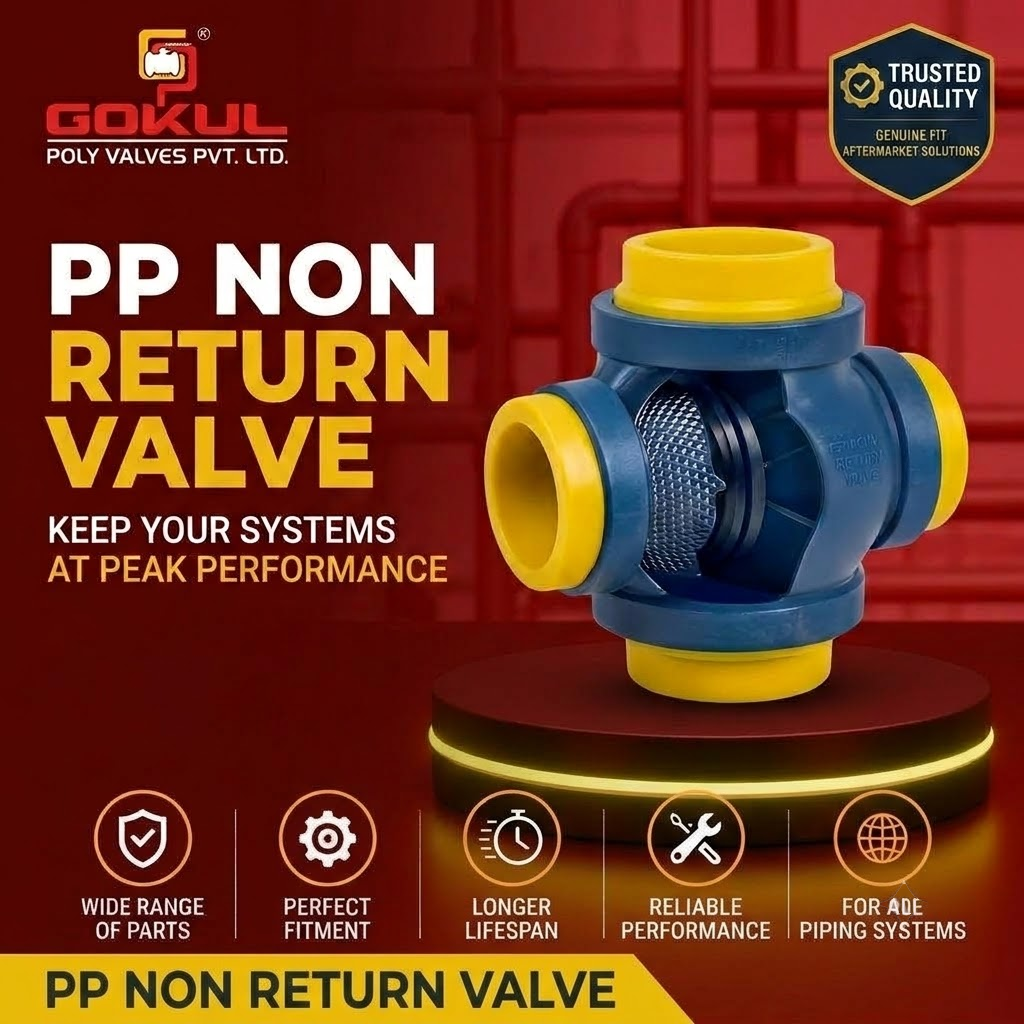
Controlling the direction of fluid movement is an important part of many industrial piping systems. A Non Return valve provides automatic protection against reverse flow without requiring regular manual operation. Along with the valve design, the way it connects to the pipeline can influence installation and maintenance.
Gokul Poly Valves Pvt. Ltd. supplies PP non return valves with flange end and screw end options for suitable industrial applications. Understanding the difference between these two connection types can help in selecting a valve that matches the existing piping arrangement.
What Is a PP Non Return Valve?
A PP non return valve is designed to allow fluid movement in one direction and restrict reverse flow. It can be used in suitable water, chemical and industrial piping systems where backflow needs to be controlled.
The valve operates automatically according to the direction and pressure of the fluid. When the fluid moves in the required direction, the valve allows passage. When the flow attempts to move backwards, the internal mechanism closes the passage.
The main difference between the two options discussed here is the way the valve connects to the pipeline.

Connection Style and Installation
The connection method is one of the main differences between the two valve options. A PP Non Return Valve Flange End is connected to the pipeline through matching flanges. The valve is placed between the pipe flanges and secured with suitable bolts and related components.
This type of arrangement can be useful in piping systems where flanged joints are already used. It can also make valve removal more convenient when inspection, servicing or replacement is required. Proper alignment between the valve and pipeline is important during installation.
Threaded Connections for Compact Piping
A PP Non Return Valve Screw End uses threaded connections to join with the corresponding pipe or fitting. This type of arrangement can be suitable for piping systems where screw connections are already part of the layout.
The threaded design can provide a straightforward connection for suitable applications. The threads of the valve, pipe and fittings need to match correctly to ensure proper installation. It can also be considered where a flanged connection is not part of the existing pipeline arrangement.
Flange End vs Screw End
| Feature | PP Non Return Valve Flange End | PP Non Return Valve Screw End |
|---|---|---|
| Connection | Flanged | Threaded |
| Installation | Connected between pipe flanges | Connected through threaded ends |
| Suitable Layout | Flanged piping systems | Threaded piping systems |
| Maintenance | Can be removed by opening the flange connection | Can be removed by disconnecting the threaded connection |
| Space Requirement | May require more surrounding space for flange and bolts | Generally suitable for more compact threaded arrangements |
| Selection | Based on existing flange arrangement and pipe size | Based on matching thread and pipe arrangement |
Factors to Consider Before Selection
- Pipe Size: Choose a valve that matches the pipeline size.
- Connection Type: Check whether a flange or screw connection is required.
- Fluid Type: Consider the type of fluid flowing through the valve.
- Material Compatibility: Ensure the valve material suits the fluid and operating conditions.
- Installation Space: Check the available space for fitting and maintenance.
- Maintenance: Select a connection that allows easy access when required.
A PP Non Return Valve Manufacturer can provide suitable connection options based on the requirements of the piping system.
FAQs
The main difference is the connection method. Flange-end valves use flanged joints, while screw-end valves use threaded connections.
A screw-end valve is designed for threaded connections. The pipeline arrangement would need suitable fittings or changes if a different connection type is required.
Selection should consider pipe size, connection type, fluid, operating conditions, installation space and maintenance requirements.
Conclusion
PP non return valves with flange end and screw end connections perform the same basic function of controlling reverse flow, but they differ in how they connect to the pipeline. Flange-end designs suit flanged arrangements, while screw-end designs are intended for suitable threaded connections.
The right selection should be based on pipe size, connection arrangement, fluid compatibility, installation space and maintenance requirements.