



Pipeline systems are used to transport water and other fluids across different applications. In irrigation, water supply, factories, and treatment plants, suitable fittings are needed to connect pipes with valves, pumps, and other equipment. These fittings also make it easier to access connected components for inspection, maintenance, or replacement when required.
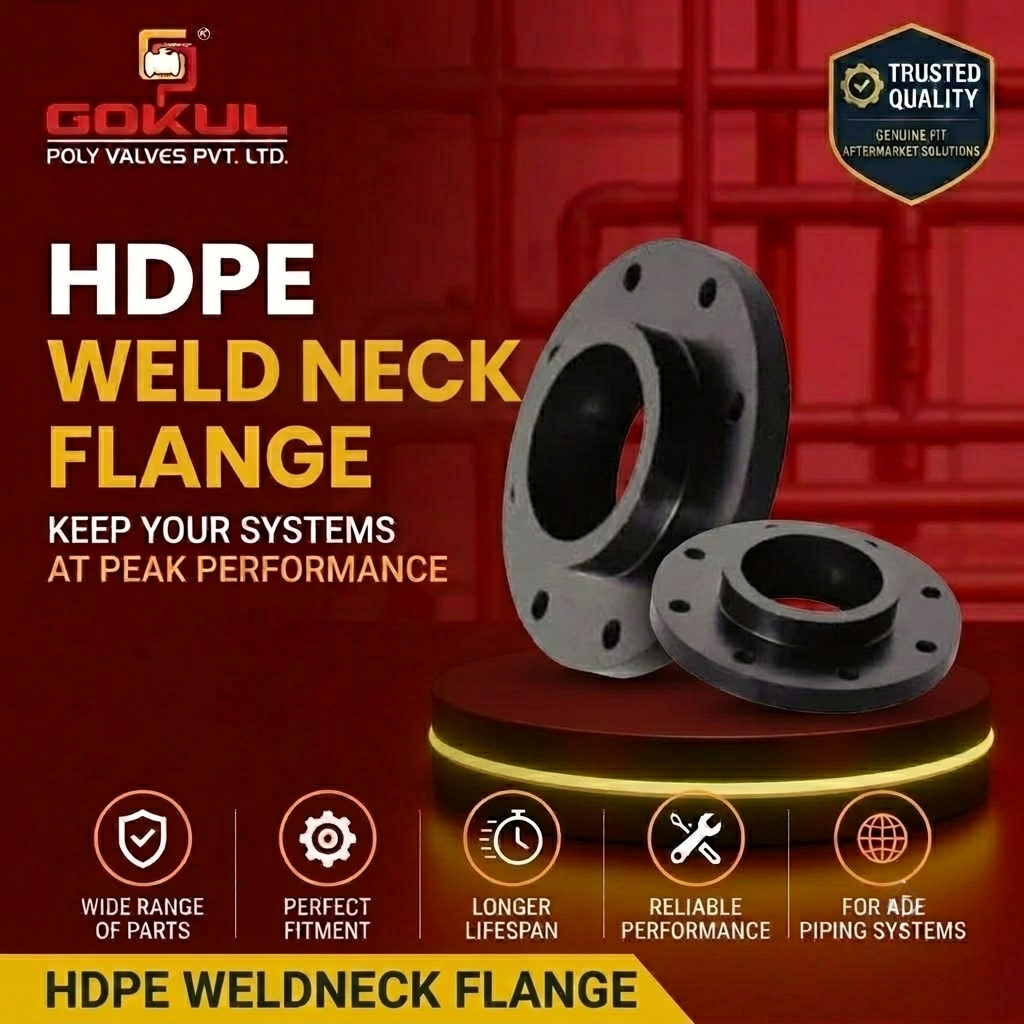
An HDPE Weld Neck Flange is used to create a flanged connection in compatible HDPE piping systems. Different types of HDPE flanges are available to suit specific pipeline requirements. Before selecting a flange, it is important to consider the pipe size, operating pressure, fluid type, and installation method. Gokul Valves offers HDPE pipe fittings for different piping applications, helping customers explore suitable options based on their project requirements.
01
Water Supply and Distribution Systems
Distribution systems are used to transport water to houses, commercial buildings, industries, and other areas. During such transportation, pipes must be joined with valves, pumps, and other accessories.
Flanged connections are useful at these points because they allow equipment to be disconnected when maintenance is required. In HDPE water pipelines, the flange should match the pipe dimensions and the connected equipment. Proper alignment and the correct gasket also help create a suitable joint.
02
Agricultural Irrigation Projects
Farm irrigation systems use pipelines to move water from a source to different fields. Pumps, control valves and other equipment are often part of these setups.
The flange makes it easier to disassemble or exchange connected equipment without disrupting the whole configuration of the piping system. This would be useful when the pump or the valve needs maintenance. The flange size and pressure rating should match the requirements of the irrigation system.
03
Industrial Fluid Handling
Factories have pipelines for moving water and other fluids from one tank to another or between pumps and machines that process the fluids. Fittings that are utilised in such pipelines depend on the nature of the fluid, temperature, pressure, and the kind of operation.
HDPE fittings may suit some factory applications due to their resistance to corrosion. Nevertheless, there is a need for compatibility of the fluid that is being moved with the HDPE fitting and the method of connection too.
04
Water Treatment and Wastewater Plants
The water treatment plants and sewage facilities have pipelines for transporting water and effluents from one point to another within the various stages. The pipelines link the pumps, valves, tanks, and treatment units.
Flanges enable access to the connected parts when there is a need for inspection, cleaning, or replacement of the part. It is important that the right type of fitting is chosen depending on the fluid in the pipeline and the working conditions.
05
Infrastructure and Drainage Projects
Infrastructure projects often include extensive water supply, drainage and wastewater networks. These pipelines may run across large areas and connect with different types of equipment along the way.
Flanges are helpful at joints where equipment might have to be removed later for maintenance purposes. Before installing a flange, it is crucial to check the size of the pipe and flange, hole position and pressure rating of the flange. It should also match the connecting equipment.
What to Check Before Selecting a Flange
Selection of a flange is not just a matter of determining its fit with the pipe. A couple of crucial factors need to be determined before making a selection.
- Pipe sizing: The flange must be compatible with the pipe diameter and type of connection.
- Pressure class: Ensure that the flange is appropriate for the working pressure of the pipeline.
- Compatibility of materials: Determine whether HDPE is appropriate for the fluid and temperature range.
- Joining technique: The fusion or welding process should be carried out in accordance with recommended procedures.
- Installation: Before installing the system into use, verify the installation process and specifications.
FAQs
It connects compatible HDPE pipes with valves, pumps and other equipment through a flanged joint.
They are used in suitable water supply, irrigation, industrial piping and wastewater treatment systems.
Check the pipe size, flange dimensions, pressure rating, material compatibility, alignment and installation procedure.
Conclusion
HDPE flanges are used in various pipeline projects, from agricultural irrigation and water distribution to industrial fluid handling and wastewater treatment. The right choice depends on the pipe dimensions, operating conditions and equipment being connected. Gokul Valves offers HDPE pipe fittings, including weld-neck flanges, for different piping requirements.
Need HDPE pipe fittings for your next project? Contact Gokul Valves to discuss your requirements and find a suitable option for your pipeline system.